By Daniel Velasco Rallo – Strategic Planner

Every year, companies do the same thing: review sales, analyze figures, adjust budgets, and set goals. However, very few do what’s truly important: transform historical data into a real competitive advantage.

2025 is over. But the data it left behind—purchases, interactions, tickets, calls, campaigns, customer behavior—is now one of your company’s most valuable assets. The difference between growth and stagnation in 2026 won’t depend on how much you invest in advertising, but on how well you use the information you already have.

The problem: companies have data, but not intelligence

Most companies today have:

  • A CRM
  • An ERP
  • Sales records
  • Customer histories
  • Call center data
  • Billing bases

The problem is that all of that lives in silos.
These are facts… but they are not decisions.

This is where technologies like machine learning, artificial intelligence, OCR, and analytics platforms come in, allowing thousands of records to be transformed into concrete actions to sell more, retain customers, and optimize resources.

What kind of data from 2025 will actually help us sell more in 2026?

Not all data is created equal. The data that truly generates revenue is:

Data type What it reveals
Purchase history Who buys, what they buy, and how often
Frequency Who is loyal and who is about to leave
Average ticket Which customers generate the most profit?
Channels (call center, WhatsApp, store) Where to sell best
Claims and support Who is at risk of abandonment?
Promotions redeemed Which incentives actually work

This data, when connected to an intelligent CRM and machine learning models, allows for predicting behaviors and designing personalized strategies.

From data to sales: how it works in practice

This is where many companies fall short.
“Viewing dashboards” is not enough.

In LMS we use an architecture that connects:

  • OCR for digitizing tickets, invoices or receipts
  • CRM to unify customer information
  • Machine learning to detect patterns
  • Loyalty programs to activate the user
  • Call center and WhatsApp to execute the action

Real-life example:
The system detects that a B2B customer has reduced their purchase frequency by 35% in the last 3 months → a personalized offer is activated → the call center is notified → the customer receives an exclusive benefit → customer churn is prevented.

That’s data turned into money.

Why 2026 will be the year of hyper-personalization

Consumers no longer respond to generic promotions.
Thanks to artificial intelligence, it is now possible to create unique incentives for each customer:

  • Dynamic discounts
  • Repurchase bonds
  • Benefits by category
  • Offers by channel
  • Behavioral Rewards

This is impossible without:

  • A good CRM
  • Clean data
  • Automation
  • Segmentation algorithms

Companies that do not adopt this approach by 2026 will be trapped in promotions that only destroy margins.

The role of call centers and WhatsApp in 2026

At LMS we see it clearly:
The call center is no longer just for support.
It’s a sales and customer loyalty engine.

Integrated into a loyalty program and a CRM, it allows:

  • Activate dormant customers
  • Explain the benefits
  • Increase average ticket
  • Recover shopping carts
  • Accelerate decisions

And WhatsApp becomes the natural channel to close the deal.

Which companies will win in 2026?

Those who:

  • Use your historical data
  • Segment with machine learning
  • They automate incentives
  • Reward loyalty
  • Measure everything with analytics

Not those that spend the most on advertising.

Do you want to implement one? Schedule a meeting here

At Loyalty Marketing Services, we design platforms that connect CRM, artificial intelligence, OCR, call centers, and loyalty programs into a single ecosystem that turns data into sales.

Do you want to use your 2025 data to grow in 2026?
Schedule a meeting with our team and we’ll show you how.


Version focused on Loyalty Programs

How to use your customer data to create a profitable loyalty program in 2026?

A loyalty program can no longer rely on generic points. By 2026, the most profitable programs will be those that use machine learning and CRM to reward the right customer, at the right time, with the right incentive.

The data from 2025 allows us to:

  • Detecting who is loyal
  • Who buys based on price?
  • Who is about to leave
  • Who generates the highest margin
  • And create smart reward rules.

Frequently Asked Questions (FAQ)

What is a smart CRM?
It’s a CRM that not only stores data, but also connects it with analytics, machine learning, and automation to generate sales actions.

How does machine learning help you sell more?
It allows you to predict churn, detect high-value customers, and recommend personalized offers.

What is OCR and why is it key?
OCR allows you to digitize tickets, invoices, and physical receipts to integrate them into the CRM and loyalty program.

Is a call center still relevant?
More than ever. Integrated with data and loyalty, it becomes a direct channel for conversion and retention.

How long does it take to implement something like this?
A functional system can be operational in 6 to 12 weeks, depending on the scope.
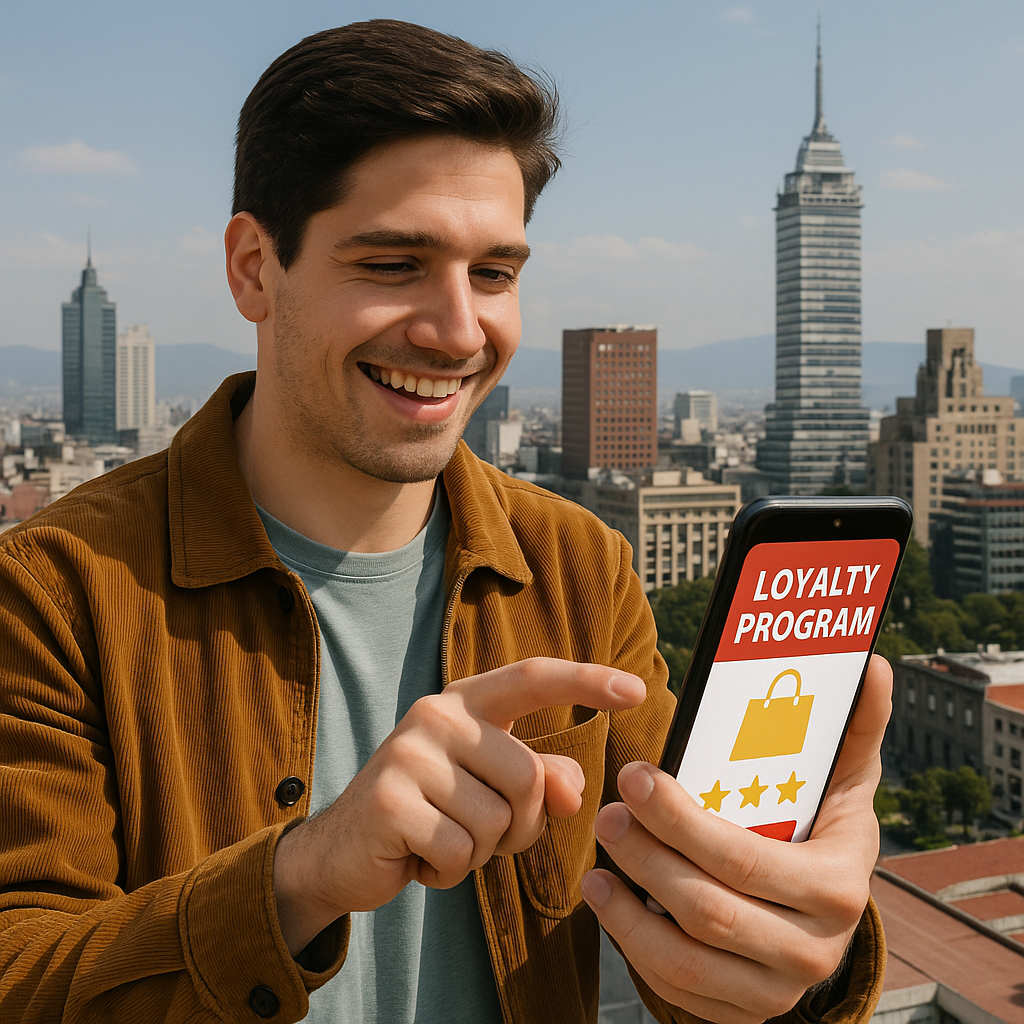
In the age of data and personalization, loyalty is no longer a luxury: it is a strategic necessity.

As consumers have more choices and less patience, brands that don’t invest in loyalty programs are missing out on valuable sales, data, and relationships. Meanwhile, their competitors are building loyal audiences, gathering insights with every purchase, and optimizing their offerings with artificial intelligence.

Is your company ready or is it lagging behind?

The new market rule: build loyalty or disappear

According to Harvard Business Review , acquiring a new customer can cost between 5 and 25 times more than retaining an existing one. However, many companies in Latin America continue to invest in acquisition without strengthening customer loyalty.

Today’s consumers expect something in return : rewards, recognition, personalization. If you don’t offer it, your competition will.

5 signs your company is losing market share because it doesn’t have a loyalty program

  1. You have to compete solely on price.
    Without loyalty, your customer will go to whoever offers the next discount.
  2. You don’t know your end customer.
    If you sell through distributors and don’t capture your own data, you’re not building a community.
  3. Your campaigns are massive, not personalized.
    Lack of segmentation limits the impact of your promotions and your ROI.
  4. You don’t have the data to make decisions.
    Without a CRM powered by transactions, feedback, and behavior, you’re making decisions blindly.
  5. Your competitors already have loyalty programs.
    Brands like Starbucks, Amazon, Nike and hundreds more in Latin America are already years ahead.

What do brands that do have loyalty programs achieve?

  • Purchase frequency increases by up to 25%.
  • They personalize promotions with Machine Learning
  • They collect receipts using OCR to validate frictionless purchases
  • They use a smart CRM to segment, reward, and reactivate customers
  • They automate notifications via Call Center or WhatsApp
  • They reward not only purchases, but also training, referrals, and digital interaction.

It’s not just about giving away points, but about building community and a data strategy

At LMS, we design customized loyalty programs for various industries (retail, consumer goods, construction, technology, real estate, and more). Whether you sell directly or through channels, we can help you connect with your end consumer through:

  • Web and app platforms
  • Purchase record with OCR
  • Segmentation by Machine Learning
  • Real-time dashboards
  • Multichannel communication: email, WhatsApp and Call Center

Do you want to implement one?

Schedule a meeting here 👉 https://www.lms-la.com/#contacto

Frequently Asked Questions (FAQ)

How long does it take to implement a loyalty program?

On average, between 2 and 4 months, depending on the level of customization and integration with existing systems (ERP, CRM, etc.).

Does a loyalty program only work with end customers?

No. We also design programs for sales force, distributors, employees, and referrers .

What technology is needed?

LMS provides you with everything: web/app platform, CRM, OCR, points engine, dashboards and call center support if you wish.

Loyalty programs

By Daniel Velasco Rallo
Strategy & Loyalty Expert, LMS LATAM

Do you want your customers in Mexico to not just buy from you once, but to come back again and again? The key is an effective loyalty program . In this 2025 guide, we’ll reveal how to design one that truly works, drawing on our more than 25 years of experience helping leading brands. Forget simple discounts; we’ll show you how to build a lasting and profitable relationship with your customers.

How to design an effective loyalty program in Mexico (2025 Guide)
Loyalty Marketing Services

What is a loyalty program?

A loyalty program is a marketing strategy designed to encourage customers to make repeat purchases at your business. It goes beyond a simple discount; it aims to build an emotional connection with the brand, offer exclusive benefits, and reward loyalty. Essentially, it’s a win-win: the customer receives added value, and you secure their long-term loyalty.

Why they are key in Mexico (recent data)

In a market as competitive as Mexico’s, customer loyalty is invaluable. A recent study reveals that Mexican consumers are more likely to choose brands that offer loyalty programs, even if prices are slightly higher. This demonstrates the power of perceived value and the desire to feel appreciated. Furthermore, the Mexican economy presents unique challenges, and effective loyalty programs can help companies retain customers during periods of economic uncertainty. An effective loyalty program is a highly cost-effective tool.

At Loyalty Marketing Services we have 27 years of experience and work with over 50 brands.

At Loyalty Marketing Services, we have over 25 years of experience designing and implementing successful loyalty programs for more than 50 leading brands in Mexico and Latin America. We’ve seen firsthand what works and what doesn’t. Our expertise allows us to offer you a unique perspective and customized solutions for your business. We have in-depth knowledge of the Mexican market and understand the specific needs of your customers.

Common mistakes when designing loyalty programs

Despite their potential, many loyalty programs fail due to common mistakes. Avoid these pitfalls:

Just give discounts

Offering only discounts might be appealing in the short term, but it doesn’t build genuine loyalty. Customers will focus solely on price and switch brands as soon as they find a better deal. Instead, strive to offer unique experiences, exclusive benefits, and added value that goes beyond simply saving money.

Not measuring ROI

A loyalty program without metrics is like sailing blind. It’s crucial to define key performance indicators (KPIs) and constantly monitor return on investment (ROI). Are you increasing purchase frequency? Improving customer retention? Increasing the average order value? If you don’t measure, you can’t improve.

Do not use technology (CRM, AI, analytics)

In the digital age, technology is your ally. A CRM (Customer Relationship Management) system allows you to efficiently manage customer information, personalize communication, and offer relevant rewards. Artificial intelligence (AI) can help you analyze large volumes of data to identify behavioral patterns and predict your customers’ needs. An effective loyalty program must be supported by modern technological tools.

Step-by-step strategic design of an effective loyalty program

Here’s a step-by-step guide to designing a loyalty program that actually works:

Define objective (repurchase, recurrence, ticket)

What do you want to achieve with your loyalty program? Increase purchase frequency? Encourage repeat business? Increase the average order value? Define a clear and specific objective so that all your actions are aligned.

Choose a model (points, cashback, levels)

There are various loyalty program models available. Choose the one that best suits your business and your customers:

  • Points program: Customers accumulate points for every purchase and redeem them for rewards.
  • Cashback: Customers receive a percentage of their purchases back in cash or credit.
  • Tiered program: Customers move up a level as they make purchases and receive increasingly greater benefits.

Integrate technology (app, CRM, AI)

Integrate your loyalty program with a mobile app, a CRM system, and AI tools for more efficient management and a personalized experience. An app allows customers to access their rewards, track their points, and receive exclusive offers. A CRM lets you segment your customers and send them relevant communications. AI helps you personalize rewards and predict your customers’ needs.

Operation and Logistics

Clearly define the operational and logistical processes of your loyalty program. How will customers register? How will they accumulate points or cashback? How will they redeem their rewards? Ensure the process is simple and seamless to avoid frustration.

Omnichannel communication

Use an omnichannel communication strategy to keep your customers informed about your loyalty program. Send emails, push notifications, text messages, and post content on your social media channels. Personalize communication based on each customer’s profile to increase relevance.

Short case: Real client (anonymous)

To protect confidentiality, we will not reveal the name of the company, but we can share the impact of our work.

  • Problem: A restaurant chain in Mexico was experiencing a high customer churn rate and needed to increase visit frequency.
  • Solution: We designed and implemented a points-based loyalty program with customized rewards and an intuitive mobile app.
  • Result: We reduced churn by 27% in 6 months and increased visit frequency by 15%.
How to design an effective loyalty program in Mexico (2025 Guide)

Frequently Asked Questions

How much does it cost to implement a loyalty program?

The cost varies depending on the complexity of the program and the technology used. It’s important to define a realistic budget focused on ROI.

What type of rewards are most effective?

Rewards should be relevant to your target audience. Offer a combination of discounts, free products, exclusive experiences, and early access to new products.

How do I measure the success of my loyalty program?

Define clear KPIs, such as customer retention rate, purchase frequency, average order value, and ROI. Use analytics tools to monitor performance and make adjustments as needed.

Conclusion and CTA

Implementing an effective loyalty program in Mexico is a strategic investment that can generate significant long-term results. Don’t settle for simple discounts; build lasting relationships with your customers and reward their loyalty. An effective loyalty program is more than a tool, it’s an investment in the future.

Ready to take your loyalty program to the next level? Schedule a call .

In a market where finding talent is already difficult, retaining it is an even more critical task. Many companies invest significant resources in acquiring new clients, but neglect those who make that growth possible: their own employees.
That’s where employee loyalty programs come in, a powerful—and still largely unexplored—strategy to strengthen internal culture, motivate teams, and reduce turnover.

What are employee loyalty programs?

Unlike programs aimed at the end consumer, these types of initiatives are designed to recognize, reward, and retain talent within the company.
Their goal is not only to motivate, but also to generate a sense of belonging, increase productivity, and foster long-term professional growth.

Key benefits of building loyalty within your team

Implementing an internal loyalty program has tangible impacts:

  • Reduce turnover : replacing an employee can cost between 50% and 200% of their annual salary.
  • It improves the work environment : employees feel valued and heard.
  • Boost productivity : motivated employees produce up to 20% more.
  • It strengthens culture : values are reinforced and community is built from within.
  • Absenteeism decreases : motivation and a sense of purpose generate greater commitment.

How does a program like this work?

At LMS, we design programs tailored to the profile, culture, and needs of each company. The methodology may include:

  1. Accumulation of points : for goals achieved, seniority, internal recognition or participation in training.
  2. Rewards catalog : products, experiences, days off, personalized benefits.
  3. Gamification : rankings, challenges, badges, and dynamics to motivate continuous participation.
  4. Personalized digital platform : where each employee can monitor their achievements and benefits.
  5. Integration with human resources and internal CRM to automate tracking.

Incentives that go beyond money

A good employee loyalty program isn’t just about monetary rewards. Here are some examples of powerful incentives:

  • Additional days off based on performance
  • Tickets to concerts or exclusive experiences
  • Public and digital recognition
  • Wellness memberships (gyms, mental health apps, etc.)
  • Development and education programs
  • Vouchers or electronic wallets with flexible use
  • Personalized birthday gifts

Comparison: external vs internal loyalty

ElementCustomer ProgramEmployee Program
Main objectiveIncrease salesRetaining and motivating talent
Type of rewardDiscounts, points, productsBenefits, days off, gifts
ChannelBrand app/websiteIntranet, internal app, email
Expected resultsCustomer loyaltyCommitment, productivity
Key metricBuybackRetention / performance
Employee loyalty programs

Do you want to implement one in your organization?

At LMS, we have been designing effective loyalty programs for customers, employees, and sales channels throughout Latin America for over 27 years.
We create customized solutions that integrate with your culture and business objectives.

👉 Are you interested in one for your team? Schedule a meeting here .

Frequently Asked Questions (FAQ)

How much does it cost to implement an employee loyalty program?

It depends on the size of your company, your objectives, and the type of rewards. At LMS, we design customized proposals with scalable budgets.

Can it be applied to small businesses?

Yes. In fact, SMEs can benefit even more by retaining key talent and building a strong culture from the early stages.

Does it require a technological platform?

We recommend having one to facilitate management, monitoring, and transparency. At LMS, we have our own proprietary development that integrates easily with other systems.

How is the success of the program measured?

We analyze indicators such as turnover, internal satisfaction, productivity, participation, and team feedback.

Article written by: Daniel Velasco Rallo
Strategy & Loyalty at Loyalty Marketing Services

10 mistakes to avoid when implementing a loyalty program

Loyalty programs can be a powerful growth driver… or a major operational frustration. It all depends on how you implement them.

At Loyalty Marketing Services (LMS) , with over 27 years of experience designing and implementing loyalty programs throughout Latin America , we’ve identified the most common mistakes companies make. Some may seem small, but they have a significant impact on engagement, repeat purchases, and profitability.

Here we share the 10 mistakes to avoid when implementing a loyalty program — and, most importantly, how to avoid them with technology, strategy and tools such as CRM, OCR, Call Center, Artificial Intelligence and Machine Learning.

10 common mistakes when implementing a loyalty program (and how to avoid them)

1. Not having a clear strategy from the start

Error: Launching the program just “because the competition has one”, without defined objectives or indicators.
Solution: Define whether your goal is to increase repeat purchases, reactivate inactive customers, build distributor loyalty, or raise the average order value. At LMS, every program stems from a business-aligned strategy.

2. Ignoring customer segmentation

Error: Sending the same message and giving the same rewards to all profiles.
Solution: Use a robust CRM to segment by behavior, history, average order value, or location. This allows you to generate relevant campaigns and benefits for each customer.

3. Thinking that a loyalty program is just about accumulating points

Mistake: Offering points for every purchase without further differentiation or emotional connection.
Solution: Integrate levels, missions, storytelling, gamification, or experiences. At LMS, we design programs that go beyond transactional tasks.

4. Failure to train the internal team or sales force

Error: The customer asks about their program and the staff doesn’t know how it works.
Solution: Implement training, visual materials, tutorials, and even internal incentive programs. Loyalty starts from within.

5. Lack of specialized customer service

Error: Leaving unanswered questions about points, redemptions, registrations or expirations.
Solution: A call center with CRM access allows us to offer fast and personalized service. At LMS, we operate it with agents trained in loyalty programs and omnichannel support.

6. Not automating basic processes such as ticket validation

Error: Asking the customer to manually capture their ticket or wait days for validation.
Solution: Use OCR (Optical Character Recognition) to scan tickets from the app or website, and automatically credit points.

7. Not measuring or optimizing the program

Error: Not having clear metrics to know if the program works.
Solution: In our LMS, we integrate real-time dashboards with KPIs such as repeat purchases, points redeemed, active customers, average ticket price, NPS, and ROI . We also use machine learning to dynamically adjust the program based on user behavior.

8. Having unattractive or inaccessible rewards

Error: Offering generic, expensive, or hard-to-achieve prizes.
Solution: Design segmented catalogs with options relevant to your customer. Allow payment with points plus cash if needed. Less frustration, more redemptions.

9. Not communicating the program constantly

Error: Launching it and leaving it unattended.
Solution: Keep the program active with regular campaigns, newsletters, personalized messages via CRM, push notifications, and dynamic content on the app or website.

10. Do not adapt the program according to the channel

Error: Trying to use the same scheme for eCommerce, physical retail, wholesalers and distributors.
Solution: A good program is flexible. At LMS, we develop specific models for each type of client, channel, or industry.

Summary table: errors vs. solutions

Common mistakeLMS Solution
Without a defined strategyStrategic planning and clear goals
Without segmentationCRM with dynamic and automated profiles
Just points, no storytellingRewards ecosystem + gamification
Without team trainingTraining + materials + internal incentives
Poor customer serviceCall center with CRM + AI specializing in loyalty
Manual ticketing processesOCR for automatic upload and instant validation
Without measuring resultsDashboard with KPIs + machine learning
Unattractive rewardsCurated catalog + segment personalization
Sporadic communicationMultichannel marketing strategy
One model for allPrograms tailored to each channel and customer type
Summary table: Mistakes vs. solutions in loyalty programs. 10 common mistakes when implementing a loyalty program

Because loyalty isn’t improvised: it’s designed, measured, and evolved.

At LMS, we have been helping leading brands in Latin America build loyalty among customers, distributors, and sales forces for over 27 years with intelligent programs. We design customized solutions that combine business strategy with technology and creativity.

Does your brand need a loyalty program that actually works?

10 common mistakes when implementing a loyalty program

Schedule a meeting with our team here:
📩 contacto@lms-la.com
🌐 www.lms-la.com

Frequently Asked Questions

What is a loyalty program and how does it work?

It’s a strategy that rewards customers for buying, recommending, or interacting with the brand. It can work through points, levels, referrals, cashback, missions, or other mechanisms.

What types exist?

Transactional, experiential, sales force, distributor, multichannel, gamified, or B2B programs. At LMS, we adapt each program to your objective and segment.

How do I measure the success of the program?

With indicators such as repurchase, frequency, redemptions, program usage, NPS, average ticket, and return on investment (ROI).

10 common mistakes when implementing a loyalty program

Not having a clear strategy from the start
Ignoring customer segmentation
Thinking that a loyalty program is just about accumulating points
Failure to train the internal team or sales force
Lack of specialized customer service
Not automating basic processes such as ticket validation
Do not measure or optimize the program
Having unattractive or inaccessible rewards
Not communicating the program constantly
Do not adapt the program according to the channel.

By Daniel Velasco Rallo
Strategy – Loyalty Marketing Services

10 common mistakes when implementing a loyalty program

When a company first hears the phrase “loyalty program,” the first thing that comes to mind is: “points.” The second is: “What good is that to me?” And although almost everyone has heard the term these days, few truly understand how it works and what real benefits it can bring to their business.

This article is precisely to answer that: what is a loyalty program and how does it work? And why might it be more powerful than you think?

What is a loyalty program?

A loyalty program is a strategy to reward your customers for continuing to choose you. It can take many forms: accumulating points, VIP levels, instant rewards, exclusive discounts, personalized experiences, or even digital money that can be used within your own store.

But the reward isn’t the only important thing. What is truly valuable is what the customer feels: that you know them, that you value them, and that you care about maintaining the relationship.

How does a loyalty program work?

Behind every good program there are three things:

  1. A system for accumulating benefits : whether through points, visits, purchases, interactions, or referrals.
  2. A technological platform that allows you to record everything: from a CRM to tools like OCR or connected Call Center systems.
  3. A personalized strategy , where artificial intelligence and machine learning help predict customer behavior and offer them what they need, when they need it.

At LMS, for example, we use technology that automatically segments users and assigns them promotions that are relevant to them. This not only helps us build customer loyalty but also increases sales.

What does the customer gain?

Time, benefits, recognition, and real rewards. Simply saying “thank you for your purchase” is no longer enough. Customers expect more. And if you don’t give it to them, someone else will.

A good program creates a sense of community, of belonging. It makes shopping with you feel different.

And what does the company gain?

Valuable information. Retention. More sales. But also clarity: you know who your best customers are, why they buy from you, when they are about to leave, and how to reactivate them.

And you can scale this: from physical stores to ecommerce, from employees to distributors, from consumers to sales force.

So, how do I begin?

A loyalty program doesn’t have to be complex. But it does need to be well thought out. With clear objectives from the start: Do you want recommendations? More frequent purchases? Returns after months of inactivity?

The important thing is that it’s designed for your target customer and has the right technical and strategic support. It’s not enough to have a nice-looking card or app: you need to know what to do with the data it generates.

In summary

A loyalty program is much more than points. It’s a tool for connection, business strategy, and growth.

Now that you know what a loyalty program is, would you like to implement one? Schedule a meeting with our team here: www.lms-la.com

By Daniel Velasco Rallo, Strategic Planner

By Daniel Velasco Rallo – Strategy, Loyalty Marketing Services

In a market saturated with options, loyalty programs are no longer just about points and rewards. They’re about generating value, emotional connection, and experiences that build lasting customer relationships. But what elements transform a loyalty program into a true engine for growth and for building genuine loyalty?

In this article, we explore the essential components of a successful loyalty program, from the technology behind it to the emotional design that drives retention.

The heart of it all: knowing the customer

The first step in designing an effective program is understanding your target audience. A well-structured CRM is essential for storing, organizing, and analyzing user purchasing behavior, preferences, and habits.

Key fact: Companies that personalize their loyalty programs based on data increase their retention rate by up to 47% (Source: Forbes).

Thanks to the use of Machine Learning and Artificial Intelligence , at LMS we segment users in real time, generating value propositions adapted to each profile.

The 5 pillars of a successful loyalty program

Here is a table with the fundamental pillars:

PillarDescription
1. Clarity in the proposalThe user should easily understand how to earn and redeem points.
2. Seamless digital experienceIntuitive, visual, frictionless app or dashboard.
3. Meaningful rewardsAwards that truly connect with the user’s lifestyle.
4. Personalized communicationAutomation without losing the human touch. Segmentation by interests.
5. Gamification and emotionChallenges, levels, badges, referrals: a mechanic that encourages you to come back.

Technology that enhances loyalty

At LMS, we combine CRM, OCR, dashboards, and omnichannel tracking systems to ensure that every point delivered is backed by real data.

For example, when a customer uploads a purchase receipt (OCR), our system automatically validates it and transparently assigns points. Everything is stored in the cloud with native integrations with SAP, Salesforce, or custom platforms.

Programs that inspire: real examples

From complex programs for cement distributors and gas stations, to customized platforms for luxury brands and ticketing platforms, at LMS we have found that success depends more on understanding the user than on the size of the business to build authentic loyalty.

An industrial sector customer increased their repurchase rate by 63% in just 4 months after implementing loyalty levels + aspirational rewards.

Common mistakes when designing a loyalty program

Avoid these common mistakes found in poorly structured programs:

  • ❌ Points that are difficult to redeem or that expire without notice.
  • ❌ Not having a clean and up-to-date database.
  • ❌ Generic promotions that do not generate interest.
  • ❌ Slow, unintuitive, or non-mobile-first digital interfaces.
  • ❌ Ignoring user feedback.

How do you know if your program works?

Measure beyond ROI. Here are some key metrics:

  • % of active users vs registered users.
  • Redemption rate vs accumulation.
  • Program NPS.
  • Lifetime Value of customers with vs. without loyalty.

Conclusion

A loyalty program is not a promotion. It’s a long-term strategy that requires analysis, empathy, technology, and a lot of creativity.

At LMS, we help companies of all sizes design loyalty experiences that impact both the heart and the wallet.

Do you want to implement one?

🎯 Schedule a meeting here and discover how to design a program your clients will truly love.

👉 Contact us

Frequently Asked Questions (FAQ)

How long does it take to implement a loyalty program from scratch?
It depends on the size of the business and its current technology, but on average it takes 8 to 12 weeks.

Do I need an app?
Not necessarily. It can also work via web, WhatsApp, email, or physical QR codes, although the app offers a more complete experience.

What if I don’t have a database?
We created one from scratch with physical and digital activations, integrating OCR and manual validations if necessary.

Do the points have to expire?
Yes. This encourages repeat purchases. We can define dynamic rules based on user type.

How long does it take to implement a loyalty program from scratch?

It depends on the size of the business and its current technology, but on average it takes 8 to 12 weeks.

Do I need an app?

Not necessarily. It can also work via web, WhatsApp, email, or physical QR codes, although the app offers a more complete experience.

What if I don’t have a database?

We created one from scratch with physical and digital activations, integrating OCR and manual validations if necessary.

Do the points have to expire?

Yes. This encourages repeat purchases. We can define dynamic rules based on user type.

By Daniel Velasco Rallo | Strategy at Loyalty Marketing Services

In a market saturated with loyalty programs offering the same old rewards, the real challenge in 2025 isn’t launching yet another one, but building one that truly matters. Because today, more than points or discounts, consumers want relevance, value, and a genuine reason to return.

The keychain with your logo? It doesn’t work anymore.

For years, loyalty programs have relied on unappealing incentives: mugs, notebooks, caps, or generic products. The result? Users who redeem once—if at all—and then completely forget they’re part of the program.

Today’s consumer is different: they know their information, time, and loyalty have value. And if they’re going to give them up, they expect more than just an object with no emotional or functional value.

What do customers want in 2025?

Based on our work with brands in retail, energy, real estate, food and beverage, these are the clear trends in rewards that do generate engagement:

  1. Useful prizes
    • From household appliances to tools, users want things that make their daily lives easier. Functionality is key.
  2. Experiences
    • Concert tickets, special dinners, private tastings, or trips. People remember experiences, not disposable products.
  3. Digital Rewards
    • Virtual vouchers, gift cards, subscriptions, or mobile top-ups. Immediacy matters, and so does simplicity.
  4. Exclusive products
    • Limited editions, handcrafted pieces, collaborations, or “members-only” benefits. Feeling part of something special really matters.
  5. Personalized recognition
    • They want to be congratulated on their birthday, have the program remember their preferences, or be rewarded for their loyalty. Customers want to feel seen.

Companies that listen, win.

A loyalty program that is constantly updated, listens to the customer, and offers rewards aligned with their lifestyle becomes a true sales driver. It increases repeat purchases, improves brand perception, and transforms a business relationship into an emotional one.

And the best part: it’s not about spending more, but about investing better.

Do you want to redesign your program or launch a new one?

At Loyalty Marketing Services, we help companies throughout Latin America create loyalty programs with real impact. From concept and catalog development to the technology platform, everything is tailored to your customers and your business.

👉 [Schedule a call with our team here]

How long does it take to implement?
From 4 to 12 weeks depending on the level of customization and integration required.

Is your CRM dormant? It’s time to wake it up.

Instead of continuing to accumulate data without purpose, it’s time to transform it into actions that delight your customers . A well-designed loyalty program can revitalize your CRM and make it the engine of your customer loyalty strategy.

👉 Want to implement one? Schedule a meeting here

Why isn’t your CRM working (and how can a loyalty program save it)?

Do you have a CRM but feel like you’re not taking full advantage of its potential? You’re not alone. Many companies believe that implementing a CRM is the definitive step toward customer loyalty, but without a complementary strategy, this system becomes a static data file. The solution isn’t to replace it, but to bring it to life through a smart loyalty program .

CRM: the most underutilized tool in marketing

A well-implemented CRM (Customer Relationship Management) system can centralize all your customer information, from purchase history to call center interactions. However, many companies use it only as a data repository, without translating that information into actionable steps.

What mistakes are commonly made?

  • Do not segment based on behavior or preferences
  • Do not use AI or machine learning to interpret patterns
  • Do not integrate the CRM with active campaigns or reward programs
  • Not connecting the CRM with customer service channels such as the call center or email marketing

The role of the loyalty program: turning data into action

A CRM without a loyalty program is like having a map without a clear destination. When they’re integrated, the benefits skyrocket:

FunctionCRM onlyCRM + Loyalty Program
SegmentationBasicAdvanced with AI and ML
CommunicationUnidirectionalCustomized and bidirectional
Customer loyaltyReactivaProactive and award-winning
Use of dataLimitedEnhanced with OCR and points
Human contactPartialIntegrated via Call Center

How do we do it in LMS?

At LMS, we design complete ecosystems that connect your CRM with a dynamic loyalty program , where every interaction counts. From scanning tickets with OCR to assigning points, running personalized campaigns, and following up with your call center—all under a single strategy.

Our formula includes:

  • Segmentation with machine learning to deliver the right offer to the right profile
  • Points are accumulated based on behavior, not just purchases.
  • Integration with CRM, email marketing, push notifications and Call Center
  • Referral modules, trivia, self-assessments, gamified e-commerce

The power of the Call Center as an extension of your CRM

Many CRMs include customer service histories, but few leverage the call center as a customer loyalty channel . In an LMS, agents can:

  • Get your program questions answered in real time.
  • Apply personalized discounts based on customer profile
  • Manually record sales or special promotions
  • Conduct satisfaction surveys related to the program

And what about AI and Machine Learning?

When integrated correctly, they allow us to anticipate behaviors:

  • Which customers are about to leave?
  • Who is most receptive to specific promotions?
  • Which segment has the highest probability of repurchase?

With this information, the CRM ceases to be a dead file and becomes a platform that anticipates, recommends, and activates rewards automatically .

Frequently Asked Questions (FAQ)

Can I integrate my current CRM with a loyalty program?

Yes. At LMS we work with any CRM (Salesforce, Hubspot, Zoho, etc.) and develop custom integrations.

What if I don’t have a CRM?

We also create programs from scratch with a built-in lightweight CRM, ideal for SMEs or companies undergoing digital transformation.

What types of rewards can be handled ?

From redeemable points and exclusive experiences to access to catalogs segmented by levels.

How long does it take to implement?

From 4 to 12 weeks depending on the level of customization and integration required.

Is your CRM dormant? It’s time to wake it up.

Instead of continuing to accumulate data without purpose, it’s time to transform it into actions that delight your customers . A well-designed loyalty program can revitalize your CRM and make it the engine of your customer loyalty strategy.

👉 Want to implement one? Schedule a meeting here

By Daniel Velasco Rallo – Commercial Strategy, LMS

In an environment where competition is growing and consumers have more options than ever, retaining customers has become as important as attracting them . Loyalty Program Benefits | Loyalty Marketing Services. Well-structured loyalty programs not only improve customer relationships but also generate key information to optimize operations and increase profitability. In this article, we’ll tell you why implementing a loyalty program in your company in Mexico can make all the difference .

Why does your company need a loyalty program?

Although many companies believe their products or services are enough to generate loyalty, the reality is that consumers need a clear incentive to return . A loyalty program transforms every interaction into an opportunity to strengthen the relationship and increase customer lifetime value. Loyalty Program Benefits | Loyalty Marketing Services

Main benefits

🔄 Customer retention

Customers who are incentivized to return do so more often. A well-designed program can increase the repurchase rate by up to 40% .

📈 Increase in average ticket

Customers who accumulate points or benefits tend to spend more. They feel motivated to earn rewards and take advantage of exclusive promotions.

💡 Data-driven decision making

A good program allows you to collect information: consumption habits, preferences, frequent times, location… data that transforms your campaigns into precise actions .

🤝 Greater affinity with the brand

The customer stops seeing your company as a supplier and starts seeing it as a brand that recognizes, values, and responds to them .

📲 Active communication channel

By having a loyalty system, you can stay in touch with your customers via SMS, email, WhatsApp, or push notifications, without relying on social media or mass campaigns.

Success stories in Mexico

At LMS we have implemented loyalty programs for companies in sectors such as:

  • Retail : 30% increase in monthly repurchase.
  • Fuels : Digital record of consumption and segmentation by profile (fleet owners, taxis, frequent customers).
  • Food and beverages : Customer loyalty of more than 60% of the active base in less than 3 months.
  • B2B : Purchase volume incentives with automated rewards.

Summary table: impact before and after

IndicatorBefore the programAfter the LMS program
Purchase frequencyVariable+25% average
Average ticketLow+18% average
DatabaseNot segmentedActive segmentation
Repurchase rate1 in 5 customers3 out of 5 customers
NPS (customer loyalty)Low or noneGradual improvement month by month

Recommended resources

Frequently Asked Questions (FAQ)

Can only large companies have loyalty programs?

No. At LMS we offer scalable solutions for all types of businesses, from SMEs to corporations.

Can it be integrated with my current system?

Yes, our programs integrate with existing CRM, ERPs, or POS systems.

Can I offer customized rewards?

Of course. Personalization is one of the key pillars for a program to succeed.

Do you want to implement one?

Schedule a meeting with our team [here] and discover how your company can grow by better retaining your customers.

Do you want to implement one?

Schedule a meeting with our team [here] and discover how your company can grow by better retaining your customers.