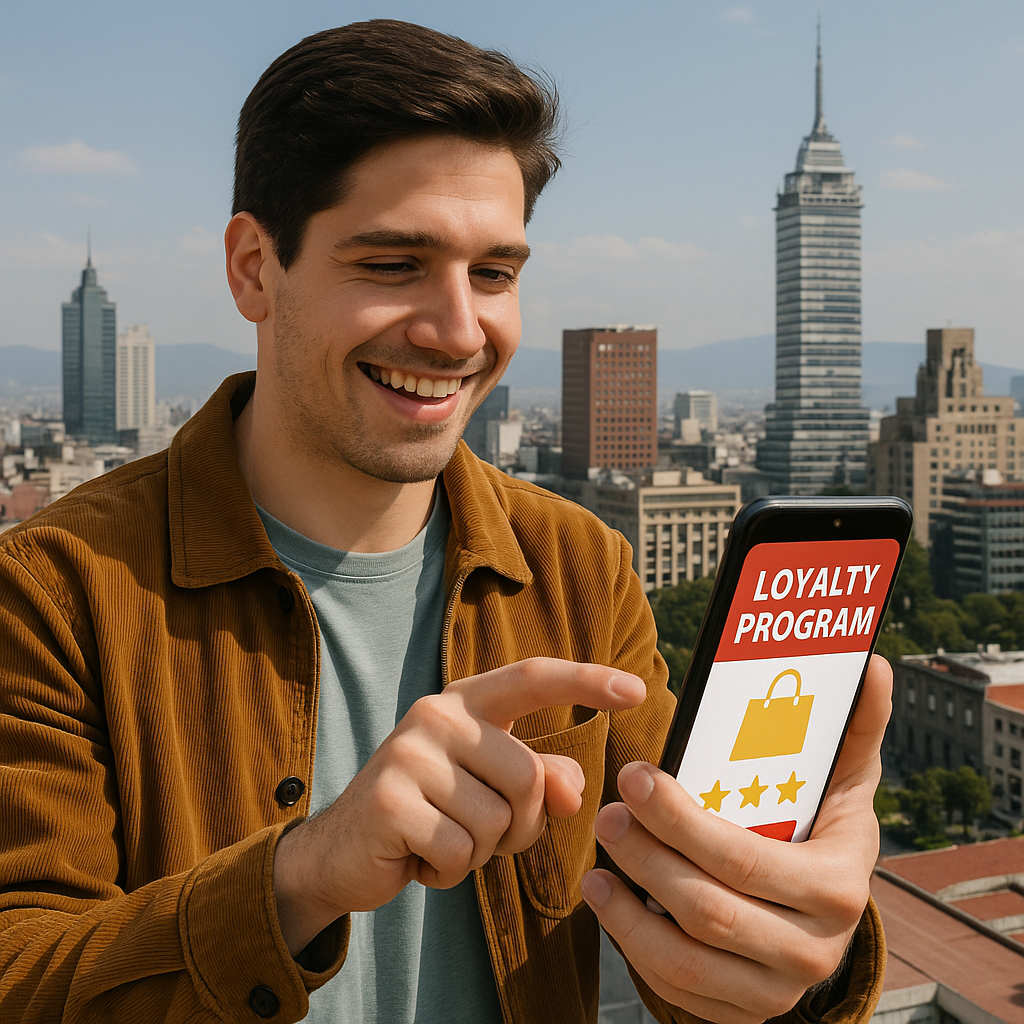
Loyalty programs have become a key tool for companies, but the reality is that many do not achieve the expected results.
The reality in Latin America
In the region, many companies implement loyalty programs without a clear strategy, leading to low adoption levels and little impact on sales.
Main reasons for failure
1. Lack of strategy
Many companies launch programs without defining:
Clear objectives
Success Metrics
Customer profile
2. Unattractive rewards
If the user does not perceive value, they simply do not participate.
3. Lack of technology
Without tools like CRM, OCR, or automation , programs become difficult to manage and scale.
4. Poor communication
A program without constant communication is an invisible program.
5. Poor user experience
Complicated processes or unintuitive platforms reduce participation.
How to avoid these mistakes?
Define clear objectives from the beginning
Design incentives aligned with the user
Integrate appropriate technology
Maintain constant communication
Measure and optimize continuously
The role of analytics and AI
The use of data allows:
Understanding the customer
Anticipating behaviors
Optimize strategies
This directly impacts the loyalty ROI .
Benefits of a well-designed program
Benefit
Business Impact
Greater retention
Customers who return more often
Increase in sales
Higher average ticket price and frequency
Better relationship
Emotional connection with the brand
Differentiation
Competitive advantage in the market
Conclusion
The problem isn’t the concept of loyalty itself, but how it’s implemented. Companies that adopt a strategic, technological, and user-centric approach will be the ones that truly generate value.
Virtually all of them: retail, banking, consumer goods, B2B.
How long does it take to implement?
Between 2 and 4 months depending on the scope.
Is it necessary to have a pre-existing database?
No, it can be built from scratch.
The 2026 FIFA World Cup will not only be the biggest sporting event in the world, it will also be one of the biggest business opportunities in Mexico’s recent history.
With over 5 billion global viewers expected and a multi-million dollar economic impact in host cities like Mexico City, Guadalajara, and Monterrey, brands have a unique opportunity to connect with highly emotional, active, and spending consumers.
The question is not whether to participate…
The question is: how to capitalize on it strategically?
This is where loyalty programs become a key competitive advantage.
Why is the 2026 World Cup a unique opportunity for brands?
The World Cup is not just an event… it is a cultural phenomenon.
During this period, key variables for any business are triggered:
Extremely high emotional component in purchasing decisions
This creates a perfect context for implementing loyalty strategies that not only sell… but also build relationships with the customer.
Loyalty programs: the bridge between emotion and conversion
A well-designed loyalty program allows you to transform emotional moments into measurable actions:
Buys
Record
Buyback
Referrals
Digital engagement
The key is to connect the World Cup context with mechanics that encourage behavior.
Loyalty strategies for the 2026 World Cup
1. Accumulation of points for themed consumption
Example:
Buy World Cup-related products → earn extra points
Consumption during matches → point multipliers
This works especially well in: Retail , Restaurants , Beverages and E-commerce .
2. Experiences as a reward (not just products)
During the World Cup, perceived value changes. Users seek experiences:
Match tickets
VIP Fan Zones
Meet & greets
Trips
A loyalty program can be positioned not as a points system… but as access to exclusive experiences.
3. Real-time gamification
This is where the real differentiator comes in. Examples:
Match predictions (earn points if you guess the results correctly)
Weekly challenges
User rankings
This dramatically increases usage frequency, engagement, and time spent on the platform.
4. Integration with digital channels (CRM + AI + OCR)
A modern program should take advantage of technology:
OCR: Upload purchase receipts and validate consumption
CRM: Segmenting users by behavior
Artificial Intelligence: personalize promotions in real time
This allows for dynamic offers during matches, hyper-segmented promotions, and reward automation.
5. Referral programs with emotional incentives
During social events like the World Cup, people share more.
Example: Invite a friend → you both earn points or benefits. Group purchase bonuses. This can trigger exponential growth in your user base.
Which industries can benefit most from it?
Although almost any industry can participate, some have greater potential:
Industry
Chance
Food and beverages
Direct consumption during matches
Retail
Themed products
Tourism
Travel and experiences
Banks and fintech
Promotions and cashback
Telecommunications
Digital consumption and streaming
ROI of loyalty programs at mass events
One of the most common mistakes is to see the World Cup as a campaign… not as a strategic investment.
A well-implemented loyalty program can generate:
Increased purchase frequency
Higher average ticket
Post-event retention
Valuable data for future campaigns
It’s not just about selling during the World Cup… but about keeping the customer afterwards.
What should a loyalty program for the World Cup include?
Key checklist:
Robust digital platform
CRM integration
Gamification Mechanics
Attractive catalog (experiences)> products)
Automation (AI + OCR)
Constant communication strategy
Conclusion
The 2026 FIFA World Cup will not just be a sporting event… It will be a battle for consumer attention.
The brands that win will not be those that invest the most in advertising, but those that achieve the following:
Generate an emotional connection
Encourage action
Build a long-term relationship
And that’s where loyalty programs stop being an “extra”… to become the core of the strategy.
Do you want to implement a loyalty program for the 2026 World Cup?
At Loyalty Marketing Services, we develop customized programs with advanced technology (CRM, OCR, AI, and gamification) to help you take advantage of key moments like this.
When should I start implementing my World Cup program?
Ideally between 6 and 12 months in advance to build a user base and prior engagement.
Can it be applied to B2B companies?
Yes. Especially for sales force, distributors, and sales channels.
What budget is needed?
It depends on the scope, but the ROI usually justifies the investment if it is well executed.
Additional version (alternative approach)
How to use the 2026 World Cup for B2B loyalty programs?
Incentivize distributors with goals linked to the World Cup
Bonuses based on sales volume during key seasons
Rankings and trips as an incentive
Ideal for industries such as:
Construction
Automotive
Mass consumption
Many companies implement loyalty programs hoping they will automatically increase sales. However, after a few months, the same question arises: how do you know if it’s really working? (retention metrics)
The problem isn’t the program itself, but the metrics being tracked. Counting registered users or points issued isn’t enough. To understand the true impact, you need to measure retention, behavior, and incremental value with a data-driven approach.
A modern loyalty program must be built on a loyalty platform with AI and CRM + OCR + automation integration that transforms transactions into actionable insights. Only then is it possible to demonstrate the ROI of loyalty to management.
The difference between vanity metrics and business metrics
Initial reports commonly focus on indicators such as:
Number of registered users
App downloads
Total points awarded
Site visits
This data is useful, but it doesn’t explain whether the customer is buying more, more frequently, or with a better margin. The metrics that truly matter are those that answer three questions:
Do customers stay with the brand longer?
Do they buy more frequently?
Do they generate greater value over time?
The 7 Key Retention Metrics
1. Active retention rate
It measures what percentage of users continue interacting with the program after a certain period. Simply being registered is not enough; the user must purchase, accumulate, or redeem points.
An AI-powered platform allows you to identify early dropouts and activate automated campaigns before the customer disconnects.
2. Incremental purchase frequency
Compare how often a member customer buys versus a non-member customer. This metric shows whether the program is generating additional visits and not just rewarding purchases that were already happening.
3. Customer Lifetime Value (LTV)
Lifetime Value is the foundation of loyalty ROI. A good program should increase the average customer value by:
Higher ticket
Higher recurrence
Preference for strategic categories
Predictive customer analytics helps project this value and prioritize high-potential segments.
4. Churn rate
Identify what percentage of users stop interacting with the brand. Integrating CRM and OCR allows you to detect early warning signs such as reduced tickets, abandoned categories, or decreased visits.
Automation allows you to launch customized recovery journeys.
5. Redemption Rate
Redemption is an indicator of engagement. A program where no one redeems doesn’t generate an emotional connection. However, uncontrolled redemption can affect margins.
Balance is achieved with smart rules and exchange propensity models.
6. Incrementality by segment
Not all customers respond the same way. Measuring performance by clusters allows us to know:
Analysis by Segment
Aim
High-return profiles
Identify where it is worthwhile to invest the budget
Mechanics of participation
Determine which incentives work best
Next best action
Use of AI for personalized recommendations
7. Cost per effective point
It links investment to actual results. It includes:
Cost of rewards
Operation
Call center support
Validations via OCR
This indicator allows for optimizing the financial design of the program.
How to turn metrics into actions
Measuring is not enough. Value emerges when data is transformed into automated decisions:
Dynamic segmentation with AI
Activation of personalized promotions
Ticket validation with OCR
CRM integration for 360° view
Automated recovery workflows
A modern loyalty program should function as a growth engine, not just a points scheme.
From measurement to loyalty ROI
When these metrics are properly connected, it is possible to demonstrate:
Real increase in sales
Churn reduction
Margin improvement
Longer customer lifetime
Organizations that adopt this vision turn loyalty into a strategic asset, not a marketing expense.
Conclusion
The right metrics are the compass of the program. Without them, any initiative becomes intuitive and difficult to defend to finance.
The combination of predictive analytics, CRM + OCR integration, and automation allows you to move from static reports to dynamic strategies that impact the business every day.
Between 3 and 6 months with historical data and correct channel integration.
Can ROI be measured without CRM integration?
It is possible, but accuracy decreases due to the lack of a 360-degree view of the customer.
Is OCR indispensable?
In industries with physical tickets or multiple POS systems, OCR speeds up validations and reduces fraud.
Is a call center still necessary?
Yes. Complement automation with human attention to resolve exceptions and increase adoption.
Daniel Velasco Rallo – Strategic Planner
For years, many companies have invested in loyalty programs hoping to increase sales, retention, and repeat purchases. However, one of the most common questions remains unanswered:
Is the loyalty program really working?
Measuring the ROI of loyalty programs isn’t easy without structured data, clear metrics, and a technological platform that allows you to analyze actual customer behavior. Today, modern programs can no longer be evaluated solely by points awarded or rewards redeemed, but rather by the direct impact they generate on the business.
What is loyalty ROI?
Loyalty ROI (Return on Investment) measures the return a company gets from the investment made in its loyalty program.
In simple terms, answer this question:
How much economic value does the program generate compared to the cost of operating it?
But unlike other marketing actions, the ROI of a loyalty program is not measured solely in immediate sales, but in indicators such as:
increase in repurchase
increased purchase frequency
average ticket growth
reduction of customer churn
longer customer lifetime value
To achieve this, it is essential to have clear and reliable retention metrics.
Common mistakes when trying to measure the ROI of a loyalty program
Many companies believe their program works, but in reality, they can’t verify it. Some of the most frequent mistakes are:
only measure how many points are awarded
not linking purchases to the end user
handle information in separate systems
validate tickets manually
lack of consolidated reports
making decisions without historical analysis
When data is scattered, ROI simply cannot be measured accurately.
Retention metrics that do allow for evaluating results
To accurately measure the impact of the program, it is necessary to analyze specific indicators that reflect the actual behavior of the customer.
Some of the main retention metrics are:
Purchase frequency: how many times a customer buys in a period
Repurchase rate: percentage of customers who buy again
Churn rate: customers who stop interacting with the brand
Average ticket: evolution of spending per transaction
Participation in the program: active users vs registered users
Time between purchases: average consumption interval
These metrics allow us to understand not only how much customers buy, but also how and why they do it.
The importance of an AI-powered loyalty platform
This is where technology plays a fundamental role.
An AI-powered loyalty platform not only stores information, but also analyzes patterns, identifies behaviors, and generates actionable insights.
ÁGATA , the AI-powered loyalty platform developed by Loyalty Marketing Services (LMS) , allows you to transform the data generated by a loyalty program into strategic information for decision-making.
Thanks to automation and the use of artificial intelligence, it is possible to detect trends that are not visible to the naked eye.
One of the greatest benefits of current technology is predictive customer analytics.
Through historical analysis of consumption, interactions, and behavior, an intelligent platform can:
Identify customers at risk of churn
identify users with high repurchase potential
anticipate drops in consumption
recommend personalized actions
This allows the program to move from being reactive to becoming a proactive growth tool.
CRM + OCR + Automation Integration: The Foundation of Real ROI
For data to be reliable, it must be integrated correctly.
CRM + OCR + automation integration enables:
record purchases automatically
Validate tickets without manual intervention
centralize customer information
eliminate operational errors
generate real-time reports
When each purchase is correctly associated with a user, ROI analysis becomes accurate and measurable.
Comparison: traditional measurement vs smart platform
Traditional approach
AI-powered loyalty platform
Scattered data
Centralized information
Manual reports
Real-time dashboards
Difficult to measure ROI
Measurable and traceable ROI
Intuitive decisions
Data-driven decisions
Basic segmentation
Predictive customer analytics
High operating costs
Automation and efficiency
How does AGATA help measure loyalty ROI?
Through its technological architecture, ÁGATA allows:
consolidate all program information
visualize key metrics in dashboards
analyze user behavior
evaluate the real impact of the rewards
measure the program’s profitability over time
In this way, the loyalty program ceases to be an expense and becomes a strategic business tool.
Benefits for the company
Implementing a correct loyalty ROI measurement allows you to:
optimize the incentive budget
focus rewards on profitable customers
Improve retention without increasing discounts
make decisions based on real data
justify the investment to management and finance
Conclusion
Today, the most successful loyalty programs are not those that award the most points, but those that generate valuable information.
Measuring the ROI of customer loyalty requires technology, integration, and advanced analytics. With the right platform, data ceases to be isolated numbers and becomes a real competitive advantage for the company.
Do you want to implement one?
If you’re looking for a loyalty program that allows you to measure real results, optimize your investment, and make data-driven decisions, schedule a meeting with our team and learn how an AI-powered loyalty platform works.
Frequently Asked Questions (FAQ)
Is it possible to measure the ROI of a loyalty program?
Yes, provided there are clear metrics, structured data, and a technological platform that centralizes the information.
What differentiates a loyalty platform with AI?
The ability to analyze behavior, generate predictions, and automate operational processes.
Does predictive analytics replace human analysis?
No, it complements it. It allows for better-informed decisions.
Why is it important to integrate CRM and OCR?
Because it ensures that each purchase is correctly associated with the customer and is measurable.
Daniel Velasco Rallo
Strategic Planner
By Daniel Velasco Rallo – Strategic Planner
For years, many companies have implemented loyalty programs with a clear objective: to encourage repeat purchases.
However, in practice, most of these programs end up operating in isolation, without real measurement, without visibility of user behavior, and without the ability to evolve.
Today, loyalty can no longer rely solely on rewards or point accumulation. It requires technology, analytics, and a platform that transforms every interaction into strategic insights. This is where ÁGATA , the technology ecosystem of Loyalty Marketing Services, comes in.
Loyalty is no longer an incentive, it’s a source of data
A well-executed loyalty program generates much more than just engagement: generates behavioral data.
Every user action—a sale, a training session, an exchange, an interaction—represents valuable information that, when properly analyzed, can help make better business decisions.
The challenge lies not in obtaining the data, but in interpreting and using it strategically. ÁGATA was created precisely to address this issue.
What is AGATA and why is it key in a loyalty program?
ÁGATA is the technological platform developed by LMS that allows you to operate, measure and optimize loyalty programs from start to finish.
It’s not just about managing users or prizes, but about centralizing all program information in a single environment:
Participant behavior
Performance by segment
Results by dynamic or promotion
Evolution of the program over time
This allows loyalty to cease being a tactical action and become a measurable growth strategy.
From intuition to data-driven decisions
One of the main problems with traditional programs is that many decisions are made by intuition:
Which award works best?
Which incentive generates the most participation?
Which profile is best suited for a promotion?
With ÁGATA , these answers are no longer just guesses. The platform allows you to analyze information in real time and generate reports that help identify:
Which actions have the greatest impact?
Which segments are performing best?
Which dynamics need to be optimized or adjusted?
Loyalty becomes measurable, comparable, and scalable.
Intelligent segmentation: not all users should receive the same thing
One of the most common mistakes in loyalty programs is treating all participants the same.
AGATA allows working with advanced segmentation, considering variables such as:
Level of participation
Interaction frequency
User type
Behavior history
This allows for the design of more relevant campaigns, personalized communications, and dynamics aligned with the participant’s actual profile. The result: more engagement, better response, and a greater return on investment.
Technology at the service of strategy
At LMS, we believe that technology should not be the focus of the discussion, but rather the enabler of the strategy. That’s why ÁGATA doesn’t operate in isolation: it functions as the engine that allows the program’s strategic vision to be executed correctly.
From modules such as:
Components of the AGATE Ecosystem
Management Dashboards
Digital catalogs
Rankings
E-learning
OCR and validation
Automated reports
Everything lives within the same ecosystem, allowing for orderly and controlled operation.
Programs that evolve, not stagnate
One of the biggest benefits of working with a platform like ÁGATA is its ability to evolve. Loyalty programs shouldn’t be static. They must adapt to market trends, business objectives, and user feedback.
Thanks to continuous analysis, it is possible to:
Adjust mechanics
Launch new dynamics
Strengthen strategic products
Optimize investment
All without losing control or visibility.
The difference between having a program and having a strategy
Today, many companies have loyalty programs. Few have a well-structured loyalty strategy.
The difference lies in having a platform that allows:
Measure
Analyze
Learn
Optimize
ÁGATA allows each program to become a constant source of information for the business. Because loyalty shouldn’t just be rewarded… it should generate growth.
Do you want to implement a technology-driven loyalty program?
At LMS we design loyalty strategies backed by ÁGATA, our technological platform, which allows you to turn the relationship with your customers or sales force into measurable results.
In an environment where acquiring new customers is increasingly expensive, brands have begun to rethink their strategy. Today, true growth lies not only in selling more, but in getting customers to return, buy more frequently, and become brand ambassadors.
For this reason, in 2026 loyalty programs have become one of the main strategic investments for companies in Mexico and Latin America.
But what’s driving this shift? Why are so many companies allocating more budget to customer loyalty than to acquisition? In this article, we explain the key reasons behind this trend.
For years, many companies focused their efforts on attracting new customers through discounts, digital campaigns, and paid advertising. However, the market has changed.
Today we know that:
Acquiring a new customer costs between 5 and 7 times more than retaining a current one.
Repeat customers spend more than new customers.
Buybacks generate financial stability.
Loyalty allows us to predict revenue.
In this context, loyalty programs ceased to be “a bonus” and became a key growth tool.
What are companies looking for in 2026?
Brands no longer want generic programs. They seek solutions that directly impact their business metrics.
The main objectives include:
Increase repurchase rates.
Increase the average ticket price.
Improve retention.
Build real and segmented databases.
Obtain information about customer behavior.
Automate business and customer service processes.
This is where technology plays a fundamental role.
Data-driven loyalty programs
One of the main reasons why companies are investing more in loyalty is the use of data analysis.
A modern program no longer just awards points or prizes; it also allows:
Analyze purchasing habits.
Identify strategic products.
Detect inactive customers.
Create customized promotions.
Measure the ROI of each campaign.
All of this is achieved through integration with tools such as CRM, OCR, Artificial Intelligence, and Machine Learning.
The role of Machine Learning in loyalty
Machine Learning allows loyalty programs to learn from user behavior.
This makes it possible:
Offer benefits according to the customer’s profile.
Recommend products intelligently.
Adjust promotions in real time.
Predict dropout or low activity.
Improve the user experience.
Instead of offering the same incentive to everyone, brands can now reward strategically , optimizing their budget.
OCR and digitization of consumption
Another key reason for the growth in loyalty investment is the digitization of the purchase record.
Using OCR technology, companies can:
Register tickets or invoices automatically.
Validate information without manual processes.
Reduce errors.
Obtain reliable data.
Accelerate point accumulation.
This has allowed sectors such as retail, hardware stores, mass consumption, agribusiness and construction to adopt loyalty programs much more easily.
The Call Center as part of the program
By 2026, the Call Center will no longer operate in isolation. Today, it will be directly integrated into the loyalty program to:
User support.
Support on point accumulation.
Reward exchanges.
Incident tracking.
Direct communication with the client.
When the Call Center connects to the CRM and the loyalty program, the user experience improves significantly and the brand gains trust.
Clear benefits for companies
Investing in loyalty programs generates tangible benefits:
Benefit
Impact
Higher repurchase
Direct increase in sales
Customer retention
Less leakage
Consumer data
Strategic decisions
Advanced segmentation
More effective promotions
Automation
Less operational burden
Emotional loyalty
Long-term relationship
Loyalty programs as a competitive advantage
In highly competitive markets, price is no longer enough to differentiate oneself.
Companies with a well-structured loyalty program achieve the following:
Staying top of mind for consumers.
Create a consistent relationship.
Avoid price wars.
Building brand value.
Strengthen your business ecosystem.
That’s why more and more companies are viewing loyalty as a strategic investment rather than an expense.
What types of companies are investing the most?
In 2026, loyalty programs are growing especially in:
Retail and e-commerce
Construction and hardware stores
Agroindustry
Logistics
Mass consumption
Financial services
B2B Companies
For both end customers and sales force, distributors and channels , loyalty has become a central focus of the business.
Frequently Asked Questions (FAQ)
Does a loyalty program only work for large companies?
No. Today there are scalable programs that adapt to the size, budget and objectives of each company.
Is it necessary to have a CRM?
It’s not mandatory, but it’s highly recommended. A CRM allows you to make the most of the program’s data.
How long does it take to see the return?
Generally between 3 and 6 months, depending on the sector, communication and the mechanics of the program.
Can it be integrated with existing systems?
Yes. Modern programs can be integrated with ERP, CRM, web platforms, apps, or even WhatsApp.
The future of loyalty is here
Companies that understand the value of their customers are focusing on long-term relationships, personalized experiences, and data-driven decisions.
Therefore, in 2026, loyalty programs will not only continue to grow: they will be a key element for competing and scaling any business.
Do you want to implement a loyalty program in your company?
Schedule a meeting with our team and discover how we can help you increase sales, build customer loyalty, and transform your data into real results.
Daniel Velasco Rallo
Do you want your customers in Mexico to not just buy from you once, but to come back again and again? The key is an effective loyalty program . In this 2025 guide, we’ll reveal how to design one that truly works, drawing on our more than 25 years of experience helping leading brands. Forget simple discounts; we’ll show you how to build a lasting and profitable relationship with your customers.
Loyalty Marketing Services
Table of Contents
What is a loyalty program?
A loyalty program is a marketing strategy designed to encourage customers to make repeat purchases at your business. It goes beyond a simple discount; it aims to build an emotional connection with the brand, offer exclusive benefits, and reward loyalty. Essentially, it’s a win-win: the customer receives added value, and you secure their long-term loyalty.
Why they are key in Mexico (recent data)
In a market as competitive as Mexico’s, customer loyalty is invaluable. A recent study reveals that Mexican consumers are more likely to choose brands that offer loyalty programs, even if prices are slightly higher. This demonstrates the power of perceived value and the desire to feel appreciated. Furthermore, the Mexican economy presents unique challenges, and effective loyalty programs can help companies retain customers during periods of economic uncertainty. An effective loyalty program is a highly cost-effective tool.
At Loyalty Marketing Services we have 27 years of experience and work with over 50 brands.
At Loyalty Marketing Services, we have over 25 years of experience designing and implementing successful loyalty programs for more than 50 leading brands in Mexico and Latin America. We’ve seen firsthand what works and what doesn’t. Our expertise allows us to offer you a unique perspective and customized solutions for your business. We have in-depth knowledge of the Mexican market and understand the specific needs of your customers.
Common mistakes when designing loyalty programs
Despite their potential, many loyalty programs fail due to common mistakes. Avoid these pitfalls:
Just give discounts
Offering only discounts might be appealing in the short term, but it doesn’t build genuine loyalty. Customers will focus solely on price and switch brands as soon as they find a better deal. Instead, strive to offer unique experiences, exclusive benefits, and added value that goes beyond simply saving money.
Not measuring ROI
A loyalty program without metrics is like sailing blind. It’s crucial to define key performance indicators (KPIs) and constantly monitor return on investment (ROI). Are you increasing purchase frequency? Improving customer retention? Increasing the average order value? If you don’t measure, you can’t improve.
Do not use technology (CRM, AI, analytics)
In the digital age, technology is your ally. A CRM (Customer Relationship Management) system allows you to efficiently manage customer information, personalize communication, and offer relevant rewards. Artificial intelligence (AI) can help you analyze large volumes of data to identify behavioral patterns and predict your customers’ needs. An effective loyalty program must be supported by modern technological tools.
Step-by-step strategic design of an effective loyalty program
Here’s a step-by-step guide to designing a loyalty program that actually works:
Define objective (repurchase, recurrence, ticket)
What do you want to achieve with your loyalty program? Increase purchase frequency? Encourage repeat business? Increase the average order value? Define a clear and specific objective so that all your actions are aligned.
Choose a model (points, cashback, levels)
There are various loyalty program models available. Choose the one that best suits your business and your customers:
Points program: Customers accumulate points for every purchase and redeem them for rewards.
Cashback: Customers receive a percentage of their purchases back in cash or credit.
Tiered program: Customers move up a level as they make purchases and receive increasingly greater benefits.
Integrate technology (app, CRM, AI)
Integrate your loyalty program with a mobile app, a CRM system, and AI tools for more efficient management and a personalized experience. An app allows customers to access their rewards, track their points, and receive exclusive offers. A CRM lets you segment your customers and send them relevant communications. AI helps you personalize rewards and predict your customers’ needs.
Operation and Logistics
Clearly define the operational and logistical processes of your loyalty program. How will customers register? How will they accumulate points or cashback? How will they redeem their rewards? Ensure the process is simple and seamless to avoid frustration.
Omnichannel communication
Use an omnichannel communication strategy to keep your customers informed about your loyalty program. Send emails, push notifications, text messages, and post content on your social media channels. Personalize communication based on each customer’s profile to increase relevance.
Short case: Real client (anonymous)
To protect confidentiality, we will not reveal the name of the company, but we can share the impact of our work.
Problem: A restaurant chain in Mexico was experiencing a high customer churn rate and needed to increase visit frequency.
Solution: We designed and implemented a points-based loyalty program with customized rewards and an intuitive mobile app.
Result: We reduced churn by 27% in 6 months and increased visit frequency by 15%.
Frequently Asked Questions
How much does it cost to implement a loyalty program?
The cost varies depending on the complexity of the program and the technology used. It’s important to define a realistic budget focused on ROI.
What type of rewards are most effective?
Rewards should be relevant to your target audience. Offer a combination of discounts, free products, exclusive experiences, and early access to new products.
How do I measure the success of my loyalty program?
Define clear KPIs, such as customer retention rate, purchase frequency, average order value, and ROI. Use analytics tools to monitor performance and make adjustments as needed.
Conclusion and CTA
Implementing an effective loyalty program in Mexico is a strategic investment that can generate significant long-term results. Don’t settle for simple discounts; build lasting relationships with your customers and reward their loyalty. An effective loyalty program is more than a tool, it’s an investment in the future.
Ready to take your loyalty program to the next level? Schedule a call .
10 mistakes to avoid when implementing a loyalty program
Loyalty programs can be a powerful growth driver… or a major operational frustration. It all depends on how you implement them.
At Loyalty Marketing Services (LMS) , with over 27 years of experience designing and implementing loyalty programs throughout Latin America , we’ve identified the most common mistakes companies make. Some may seem small, but they have a significant impact on engagement, repeat purchases, and profitability.
Table of Contents
Here we share the 10 mistakes to avoid when implementing a loyalty program — and, most importantly, how to avoid them with technology, strategy and tools such as CRM, OCR, Call Center, Artificial Intelligence and Machine Learning.
10 common mistakes when implementing a loyalty program (and how to avoid them)
1. Not having a clear strategy from the start
Error: Launching the program just “because the competition has one”, without defined objectives or indicators. Solution: Define whether your goal is to increase repeat purchases, reactivate inactive customers, build distributor loyalty, or raise the average order value. At LMS, every program stems from a business-aligned strategy.
2. Ignoring customer segmentation
Error: Sending the same message and giving the same rewards to all profiles. Solution: Use a robust CRM to segment by behavior, history, average order value, or location. This allows you to generate relevant campaigns and benefits for each customer.
3. Thinking that a loyalty program is just about accumulating points
Mistake: Offering points for every purchase without further differentiation or emotional connection. Solution: Integrate levels, missions, storytelling, gamification, or experiences. At LMS, we design programs that go beyond transactional tasks.
4. Failure to train the internal team or sales force
Error: The customer asks about their program and the staff doesn’t know how it works. Solution: Implement training, visual materials, tutorials, and even internal incentive programs. Loyalty starts from within.
5. Lack of specialized customer service
Error: Leaving unanswered questions about points, redemptions, registrations or expirations. Solution: A call center with CRM access allows us to offer fast and personalized service. At LMS, we operate it with agents trained in loyalty programs and omnichannel support.
6. Not automating basic processes such as ticket validation
Error: Asking the customer to manually capture their ticket or wait days for validation. Solution: Use OCR (Optical Character Recognition) to scan tickets from the app or website, and automatically credit points.
7. Not measuring or optimizing the program
Error: Not having clear metrics to know if the program works. Solution: In our LMS, we integrate real-time dashboards with KPIs such as repeat purchases, points redeemed, active customers, average ticket price, NPS, and ROI . We also use machine learning to dynamically adjust the program based on user behavior.
8. Having unattractive or inaccessible rewards
Error: Offering generic, expensive, or hard-to-achieve prizes. Solution: Design segmented catalogs with options relevant to your customer. Allow payment with points plus cash if needed. Less frustration, more redemptions.
9. Not communicating the program constantly
Error: Launching it and leaving it unattended. Solution: Keep the program active with regular campaigns, newsletters, personalized messages via CRM, push notifications, and dynamic content on the app or website.
10. Do not adapt the program according to the channel
Error: Trying to use the same scheme for eCommerce, physical retail, wholesalers and distributors. Solution: A good program is flexible. At LMS, we develop specific models for each type of client, channel, or industry.
Summary table: errors vs. solutions
Common mistake
LMS Solution
Without a defined strategy
Strategic planning and clear goals
Without segmentation
CRM with dynamic and automated profiles
Just points, no storytelling
Rewards ecosystem + gamification
Without team training
Training + materials + internal incentives
Poor customer service
Call center with CRM + AI specializing in loyalty
Manual ticketing processes
OCR for automatic upload and instant validation
Without measuring results
Dashboard with KPIs + machine learning
Unattractive rewards
Curated catalog + segment personalization
Sporadic communication
Multichannel marketing strategy
One model for all
Programs tailored to each channel and customer type
Summary table: Mistakes vs. solutions in loyalty programs. 10 common mistakes when implementing a loyalty program
Because loyalty isn’t improvised: it’s designed, measured, and evolved.
At LMS, we have been helping leading brands in Latin America build loyalty among customers, distributors, and sales forces for over 27 years with intelligent programs. We design customized solutions that combine business strategy with technology and creativity.
Does your brand need a loyalty program that actually works?
Schedule a meeting with our team here: 📩 contacto@lms-la.com 🌐 www.lms-la.com
Frequently Asked Questions
What is a loyalty program and how does it work?
It’s a strategy that rewards customers for buying, recommending, or interacting with the brand. It can work through points, levels, referrals, cashback, missions, or other mechanisms.
What types exist?
Transactional, experiential, sales force, distributor, multichannel, gamified, or B2B programs. At LMS, we adapt each program to your objective and segment.
How do I measure the success of the program?
With indicators such as repurchase, frequency, redemptions, program usage, NPS, average ticket, and return on investment (ROI).
10 common mistakes when implementing a loyalty program
Not having a clear strategy from the start Ignoring customer segmentation Thinking that a loyalty program is just about accumulating points Failure to train the internal team or sales force Lack of specialized customer service Not automating basic processes such as ticket validation Do not measure or optimize the program Having unattractive or inaccessible rewards Not communicating the program constantly Do not adapt the program according to the channel.
By Daniel Velasco Rallo Strategy – Loyalty Marketing Services
10 common mistakes when implementing a loyalty program
When a company first hears the phrase “loyalty program,” the first thing that comes to mind is: “points.” The second is: “What good is that to me?” And although almost everyone has heard the term these days, few truly understand how it works and what real benefits it can bring to their business.
This article is precisely to answer that: what is a loyalty program and how does it work? And why might it be more powerful than you think?
Table of Contents
What is a loyalty program?
A loyalty program is a strategy to reward your customers for continuing to choose you. It can take many forms: accumulating points, VIP levels, instant rewards, exclusive discounts, personalized experiences, or even digital money that can be used within your own store.
But the reward isn’t the only important thing. What is truly valuable is what the customer feels: that you know them, that you value them, and that you care about maintaining the relationship.
How does a loyalty program work?
Behind every good program there are three things:
A system for accumulating benefits : whether through points, visits, purchases, interactions, or referrals.
A technological platform that allows you to record everything: from a CRM to tools like OCR or connected Call Center systems.
A personalized strategy , where artificial intelligence and machine learning help predict customer behavior and offer them what they need, when they need it.
At LMS, for example, we use technology that automatically segments users and assigns them promotions that are relevant to them. This not only helps us build customer loyalty but also increases sales.
What does the customer gain?
Time, benefits, recognition, and real rewards. Simply saying “thank you for your purchase” is no longer enough. Customers expect more. And if you don’t give it to them, someone else will.
A good program creates a sense of community, of belonging. It makes shopping with you feel different.
And what does the company gain?
Valuable information. Retention. More sales. But also clarity: you know who your best customers are, why they buy from you, when they are about to leave, and how to reactivate them.
And you can scale this: from physical stores to ecommerce, from employees to distributors, from consumers to sales force.
So, how do I begin?
A loyalty program doesn’t have to be complex. But it does need to be well thought out. With clear objectives from the start: Do you want recommendations? More frequent purchases? Returns after months of inactivity?
The important thing is that it’s designed for your target customer and has the right technical and strategic support. It’s not enough to have a nice-looking card or app: you need to know what to do with the data it generates.
In summary
A loyalty program is much more than points. It’s a tool for connection, business strategy, and growth.
Now that you know what a loyalty program is, would you like to implement one? Schedule a meeting with our team here: www.lms-la.com
By Daniel Velasco Rallo, Strategic Planner
By Daniel Velasco Rallo | Strategy at Loyalty Marketing Services
In a market saturated with loyalty programs offering the same old rewards, the real challenge in 2025 isn’t launching yet another one, but building one that truly matters. Because today, more than points or discounts, consumers want relevance, value, and a genuine reason to return.
The keychain with your logo? It doesn’t work anymore.
For years, loyalty programs have relied on unappealing incentives: mugs, notebooks, caps, or generic products. The result? Users who redeem once—if at all—and then completely forget they’re part of the program.
Today’s consumer is different: they know their information, time, and loyalty have value. And if they’re going to give them up, they expect more than just an object with no emotional or functional value.
What do customers want in 2025?
Based on our work with brands in retail, energy, real estate, food and beverage, these are the clear trends in rewards that do generate engagement:
Useful prizes
From household appliances to tools, users want things that make their daily lives easier. Functionality is key.
Experiences
Concert tickets, special dinners, private tastings, or trips. People remember experiences, not disposable products.
Digital Rewards
Virtual vouchers, gift cards, subscriptions, or mobile top-ups. Immediacy matters, and so does simplicity.
Exclusive products
Limited editions, handcrafted pieces, collaborations, or “members-only” benefits. Feeling part of something special really matters.
Personalized recognition
They want to be congratulated on their birthday, have the program remember their preferences, or be rewarded for their loyalty. Customers want to feel seen.
Companies that listen, win.
A loyalty program that is constantly updated, listens to the customer, and offers rewards aligned with their lifestyle becomes a true sales driver. It increases repeat purchases, improves brand perception, and transforms a business relationship into an emotional one.
And the best part: it’s not about spending more, but about investing better.
Do you want to redesign your program or launch a new one?
At Loyalty Marketing Services, we help companies throughout Latin America create loyalty programs with real impact. From concept and catalog development to the technology platform, everything is tailored to your customers and your business.
How long does it take to implement? From 4 to 12 weeks depending on the level of customization and integration required.
Is your CRM dormant? It’s time to wake it up.
Instead of continuing to accumulate data without purpose, it’s time to transform it into actions that delight your customers . A well-designed loyalty program can revitalize your CRM and make it the engine of your customer loyalty strategy.